
Can a phone camera measure heart rate? What rPPG can and cannot do
Phone cameras can estimate heart rate from tiny colour changes in the skin (rPPG). Here is how it works, where it is useful, and why it is an estimate — not a device reading.
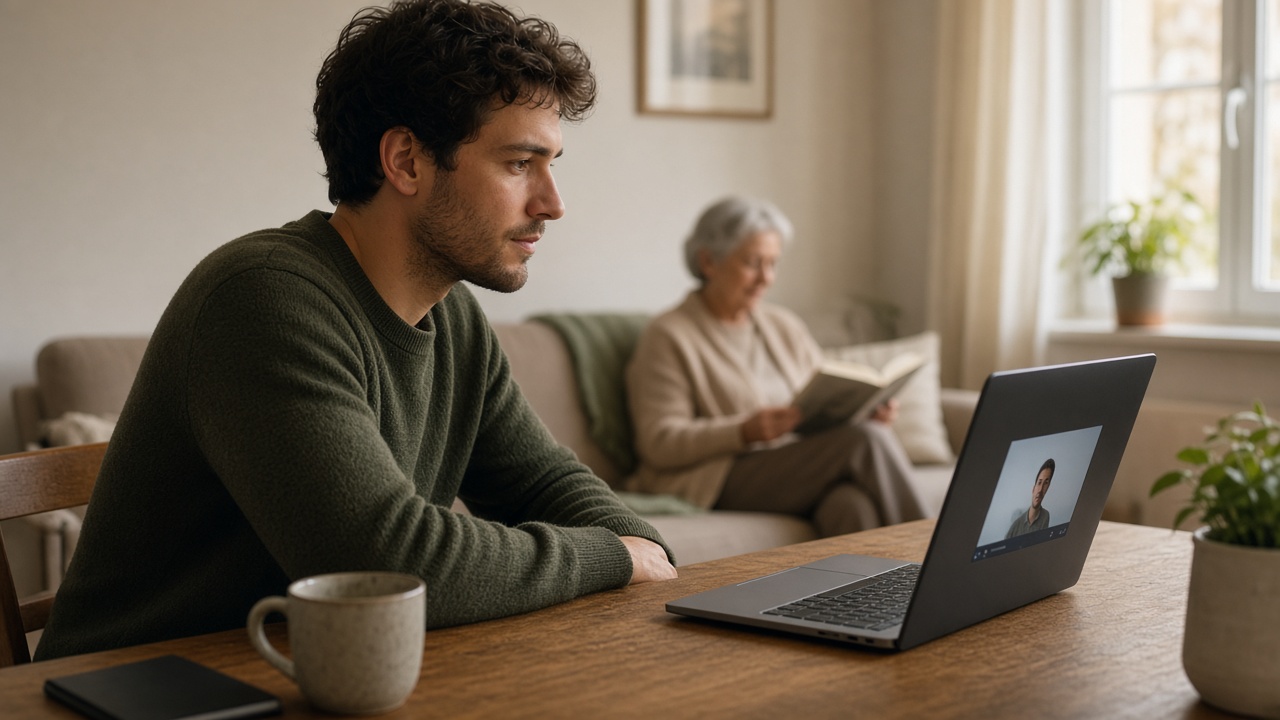
You may have seen apps that claim to read your pulse — or even your blood pressure — just by looking at your face through the phone's camera. The underlying idea is real and has a name: remote photoplethysmography, usually shortened to rPPG. But there is a wide gap between "a camera can detect a pulse signal" and "a camera is a medical monitor", and understanding that gap matters, especially on a health call.
This article explains, in plain terms, how a camera can estimate heart rate and breathing, what the technique is genuinely good for, and why sostriage treats these figures as experimental estimates that are never used for diagnosis or decisions.
How rPPG works
Every time your heart beats, a pulse of blood passes through the small vessels just under your skin. That tiny change in blood volume slightly changes how much light your skin absorbs — far too subtly for the eye to see, but within reach of a camera that can compare frames over time. By watching a patch of skin (usually the face), amplifying those minuscule colour shifts, and finding the rhythm in them, software can estimate your pulse rate. The gentle rise and fall of the chest and shoulders can, under good conditions, give an estimate of breathing rate too.
None of this requires special hardware. It is the same principle as the clip-on pulse oximeter at a clinic, but done at a distance with an ordinary camera instead of a dedicated sensor pressed against the skin — which is exactly why it is harder and less reliable.
Where it is useful
rPPG is genuinely useful as a screening signal under good conditions: a still subject, steady lighting, a clear view of the face, and enough time to average out noise. In those conditions it can give a reasonable estimate of resting heart rate, and a rougher sense of breathing rate. For a triage call, even a rough estimate can be a useful extra data point — a very fast pulse or a very fast breathing rate is worth a clinician's attention.
The key word is estimate. It is context that may prompt a question, not a measurement that settles one. On the camera page we show exactly how sostriage presents these figures and the wording it uses.
Where it breaks down
The honest limits are important. Movement ruins rPPG — a person shifting, talking, or gesturing introduces changes that can masquerade as a pulse. Poor or flickering light, a partly hidden face, low-quality cameras, and very short clips all degrade the signal. And some claims go well beyond what the physics supports: estimating blood pressure from a face video, in particular, is not something a general-purpose phone camera can do reliably, whatever an app's marketing says.
sostriage is deliberate about this. Our camera module is engineered to refuse rather than guess: if the signal is not a clean, physiological rhythm, it returns no number instead of inventing one. A blank is treated as honest; a confident wrong number is the thing to avoid.
An estimate, labelled as an estimate
Because the gap between "signal detected" and "clinical measurement" is so wide, the wording around these figures has to be exact. sostriage labels camera-derived heart-rate and breathing-rate values as experimental estimates. They have not been validated for clinical use and must not be used independently for diagnosis, treatment, patient monitoring, or clinical decision-making.
That is not legal throat-clearing; it is the point. The figures can start a conversation — "your estimated pulse looks fast, let's talk about that" — without ever being mistaken for a device reading. When a real measurement matters, a real device is the answer: a home cuff, a finger oximeter, or a clinic monitor.
The bottom line
Can a phone camera measure your heart rate? It can produce a reasonable estimate under good conditions, and that estimate can be a helpful extra signal on a triage call. It is not a monitor, it cannot be trusted for blood pressure, and it should never be the basis for a medical decision. Treated honestly — as an estimate, clearly labelled, never overriding a clinician — it is a useful tool. Treated as a measurement, it is a liability. sostriage is built around the first view and never the second.
Denne artikkelen er til opplysning og er ikke medisinsk råd. sostriage er beslutningsstøtte som signeres av en kliniker — ikke medisinsk utstyr, og ikke nødnummeret. Ved livstruende nød, ring nødnummeret der du er først.